
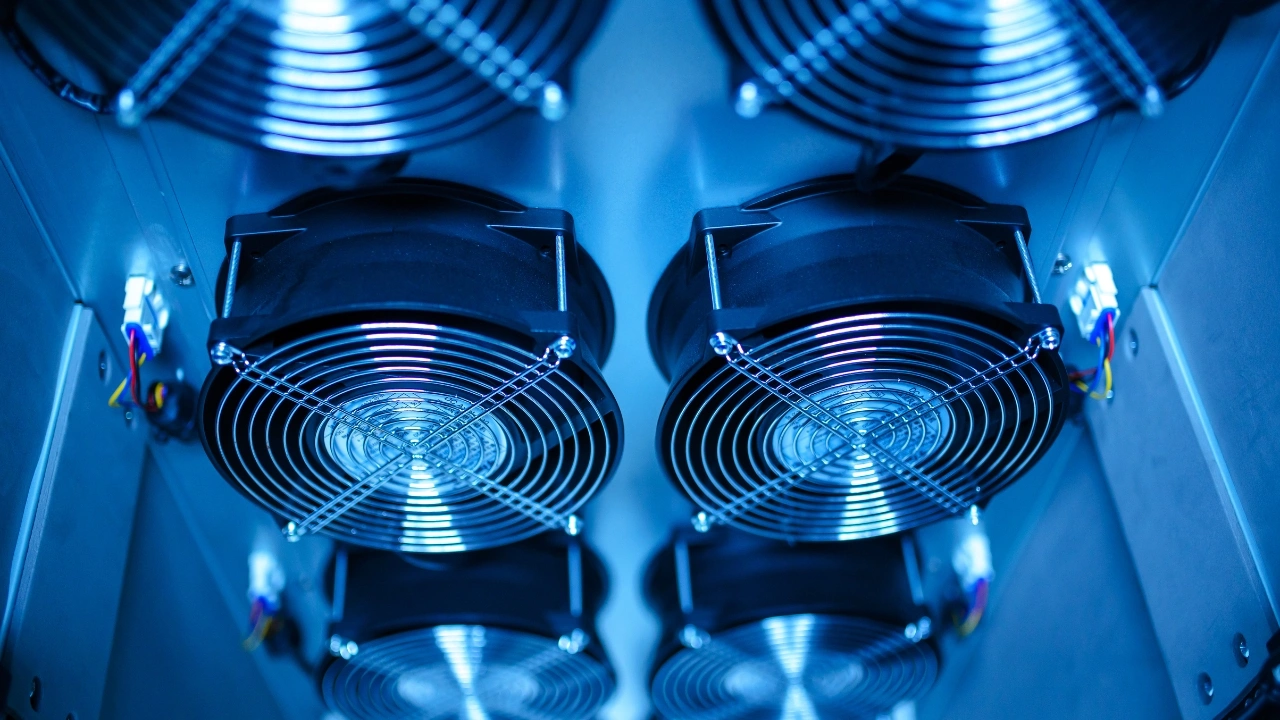

Beyond Air Cooling: Preparing Your Server Infrastructure for Direct-to-Chip Liquid Cooling (DLC)
Introduction
As artificial intelligence, machine learning, and high-performance computing (HPC) rapidly evolve in 2026, the thermal output of next-generation processors is breaking historical records. With high-end CPUs and AI accelerators now exceeding 1000W per chip, traditional air cooling is officially hitting a physical and thermal wall.
To maintain peak performance without thermal throttling, data centers and enterprise IT are rapidly shifting to Direct-to-Chip Liquid Cooling (DLC). However, transitioning to liquid cooling isn’t as simple as swapping fans for pumps—it requires a fundamental redesign of your server chassis and internal hardware architecture.
The Bottleneck of Traditional Air Cooling
For decades, high-speed fans and massive heatsinks have been the standard. But in today’s high-density environments, air cooling presents critical bottlenecks:
1. Thermal Throttling: When standard airflow cannot dissipate heat fast enough, expensive processors automatically slow down to prevent damage, wasting your compute investment.
2. Power Inefficiency: In high-density racks, the energy required just to spin massive server fans can account for a huge percentage of the total rack power consumption.
3. Space Constraints: Giant heatsinks block critical expansion slots, limiting the number of GPUs or networking cards you can fit into a single node.
How DLC Changes the Hardware Landscape
Direct-to-Chip Liquid Cooling solves these issues by circulating specialized coolant directly over the hottest components (CPUs and GPUs) via cold plates. Because liquid is exponentially more efficient at transferring heat than air, DLC guarantees sustained peak performance, significantly lowers the Power Usage Effectiveness (PUE) of data centers, and allows for much denser hardware configurations.
Why Liquid Cooling Requires Custom Chassis Engineering
You cannot simply retrofit a complex liquid cooling loop into a generic, off-the-shelf server case. Natively supporting DLC requires engineering-level customization.
This is where standard hardware fails and custom manufacturing becomes essential:
1. Custom Tubing Routing: The chassis interior must be precisely designed to allow safe, kink-free routing of coolant manifolds and tubes without interfering with RAM, PCIe slots, or power supplies.
2. Structural Support for Manifolds: Liquid cooling components add significant weight and require dedicated, reinforced mounting points within the chassis to prevent leaks caused by vibration or sagging.
3. Maintenance Accessibility: A properly designed custom chassis incorporates modular trays and quick-disconnect (QD) fittings, allowing technicians to safely swap hardware without draining the entire liquid loop.
SomyTech: Advanced Thermal Control & Customization
At SomyTech, advanced thermal management is built into our engineering DNA. True to our philosophy of “Solution of My Tech,” we design server ecosystems around your specific thermal requirements.
Whether your deployment requires an optimized air-cooled Tower Server for the edge or a custom Rackmount Chassis fully prepared for advanced DLC integration, we provide the structural stability and flexible customization you need. We bridge the gap between cutting-edge cooling technologies and practical hardware engineering.
Don’t let thermal limits throttle your business growth. Contact SomyTech’s engineering team today to discuss how our custom server solutions can prepare your infrastructure for the liquid-cooled future.
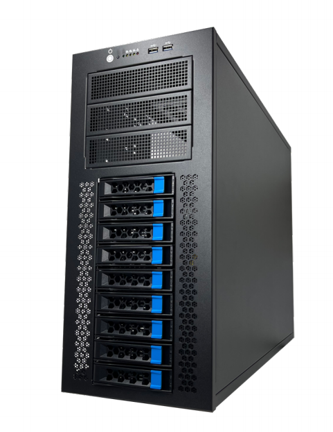
A-S4509 | Dual Intel® Xeon® Enterprise Tower Server
March 19, 2026
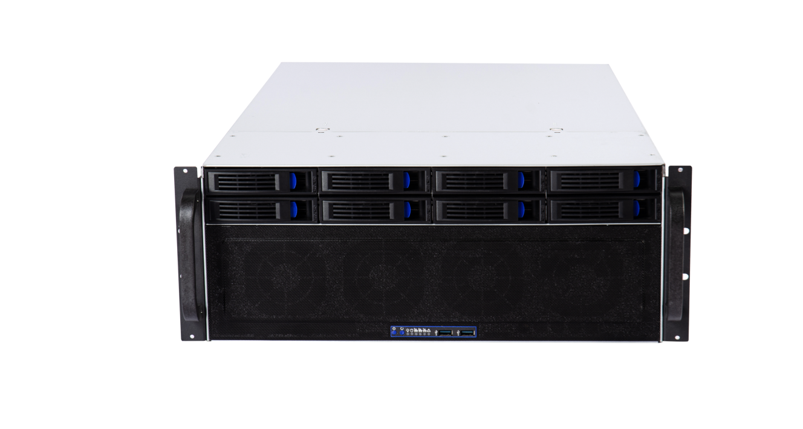
TA-S4808 | Quad NVIDIA® RTX™ 4090 AI & Deep Learning GPU Server
March 19, 2026
Stay Updated
Metus sed Disse aliquet amet ultrices faucibus mauris sito